· 7 min read
Can Dogs Eat Strawberry Pop-Tarts? The Sweet Truth Every Pet Parent Needs to Know
It’s a lazy Sunday morning. You’re curled up on the couch, savoring a warm, toasty strawberry Pop-Tart—crunchy crust, sweet, jammy filling, and that iconic frosting that melts in your mouth. Just as you take another bite, you feel a soft nudge on your hand. You look down to find your dog, tail wagging, eyes wide and hopeful, as if to say, “Hey, that looks good—can I have a taste?”
We’ve all been there. Our dogs are curious creatures, and it’s hard to resist those puppy-dog eyes when they beg for a bite of our food. But when it comes to processed treats like Pop-Tarts, the question isn’t just “can they eat it?”—it’s “should they?”
In this post, we’ll dive into the world of strawberry Pop-Tarts and your dog’s health. We’ll break down the ingredients, weigh the (very few) potential benefits against the risks, and share safer alternatives to satisfy your pup’s sweet tooth. Let’s get started!
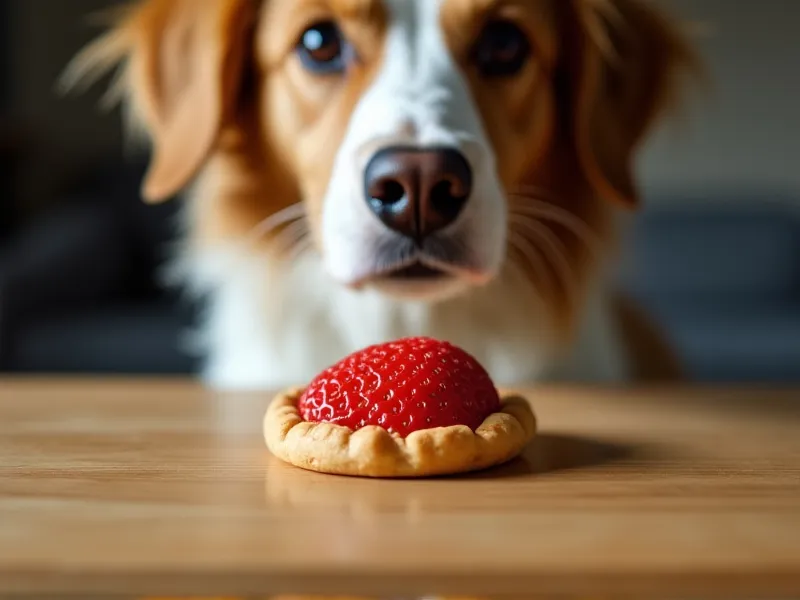
Table of Contents
- Can Dogs Eat Strawberry Pop-Tarts? The Short Answer
- What’s Actually in a Strawberry Pop-Tart?
- Potential “Benefits”: Are There Any?
- The Risks: Why Strawberry Pop-Tarts Are a Bad Idea
- How Much (If Any) Is “Safe” to Feed?
- Healthier Alternatives to Satisfy Their Sweet Tooth
- FAQ: Your Pop-Tart Questions Answered
- Conclusion: Love Them Enough to Say “No”
Can Dogs Eat Strawberry Pop-Tarts? The Short Answer
No, dogs shouldn’t eat strawberry Pop-Tarts.
While a tiny, accidental bite (think: a crumb or two) is unlikely to send your pup to the vet, these pastries offer zero nutritional value and come with several risks. From sky-high sugar content to artificial additives, strawberry Pop-Tarts are designed for human taste buds—not your dog’s health. Let’s unpack why.
What’s Actually in a Strawberry Pop-Tart?
To understand why Pop-Tarts are a poor choice for dogs, let’s start with the ingredients. A quick glance at the nutrition label (for a standard frosted strawberry Pop-Tart) reveals:
- Enriched flour: Refined carbohydrates with little fiber or nutrients.
- Sugar: The second ingredient! One pastry contains ~16 grams of sugar (that’s 4 teaspoons—more than a can of soda!).
- High-fructose corn syrup (HFCS): A cheap, processed sweetener linked to obesity and metabolic issues in humans (and pets).
- Strawberry puree concentrate: A small amount of fruit, but heavily processed and mixed with sugar.
- Vegetable oil: Often partially hydrogenated, adding unhealthy trans fats.
- Frosting: More sugar, plus artificial colors (like Red 40, Yellow 5) and preservatives (e.g., BHA, BHT).
- Artificial flavors: To mimic “strawberry” taste, since the real fruit content is minimal.
In short, Pop-Tarts are a sugar bomb wrapped in a crust—hardly a balanced meal or treat for your dog.
Potential “Benefits”: Are There Any?
Let’s be real: It’s tough to find meaningful benefits here. The “strawberry” in the filling might sound healthy, but the fruit content is negligible. A Pop-Tart has less than 1 gram of fiber per pastry, and any vitamins (like vitamin C) are stripped during processing.
Could a tiny bite offer some trace nutrients? Maybe. But compared to feeding your dog a fresh strawberry (which is packed with fiber, vitamin C, and antioxidants), the “benefits” of a Pop-Tart are nonexistent. It’s like comparing a candy bar to a spinach salad—one is empty calories, the other is nutrient-dense.
The Risks: Why Strawberry Pop-Tarts Are a Bad Idea
Now, let’s get to the important part: the risks. Even small amounts of Pop-Tarts can harm your dog over time. Here’s what to watch for:
1. Sugar Overload: A Recipe for Chronic Health Issues
Dogs’ bodies aren’t designed to process large amounts of sugar. Unlike humans, they don’t have a sweet tooth evolutionary advantage—so their systems struggle to handle excess glucose.
- Obesity: Extra sugar turns to fat, and obesity in dogs raises the risk of joint pain, heart disease, and diabetes.
- Dental disease: Sugar feeds harmful bacteria in your dog’s mouth, leading to plaque, tartar, and cavities.
- Insulin resistance: Chronic sugar intake can desensitize cells to insulin, increasing the risk of diabetes (a lifelong, costly condition).
- Energy crashes: Spikes and drops in blood sugar can leave your dog hyperactive, then lethargic.
2. Artificial Ingredients: Hidden Dangers
Pop-Tarts are loaded with additives that have no place in a dog’s diet:
- Artificial colors (Red 40, Yellow 5): Linked to allergic reactions, hyperactivity, and even cancer in some animal studies (VCA Hospitals). Dogs with sensitive skin or allergies may develop itching or rashes.
- Preservatives (BHA, BHT): Used to extend shelf life, but the FDA warns these chemicals may cause organ damage in high doses.
- Artificial flavors: Often derived from chemicals that can irritate your dog’s digestive tract.
3. Stomach Upset: From Cramping to Diarrhea
Dogs have sensitive stomachs, and sugar is a common trigger for digestive issues. Even a single Pop-Tart can cause:
- Vomiting or diarrhea (from sugar “overloading” the gut).
- Gas or bloating (due to processed carbs fermenting in the intestines).
- Pancreatitis (rare, but possible with very high sugar/fat intake). The pancreas produces enzymes to break down food; excess sugar can trigger inflammation, which is painful and life-threatening.
4. Choking Hazard: A Crunchy Risk
The crust of a Pop-Tart is dry and crispy, and the filling is sticky. For small dogs (or dogs who gulp food), this can pose a choking hazard. A chunk of crust could get lodged in their throat, or the sticky filling might clump and block their airway.
How Much (If Any) Is “Safe” to Feed?
The best answer? None. Pop-Tarts offer no nutritional value and carry unnecessary risks.
If your dog accidentally snatches a bite (e.g., you dropped a crumb), don’t panic. A tiny piece (less than 1/4 of a pastry) is unlikely to cause harm. Just monitor them for 24 hours for vomiting, diarrhea, or lethargy.
But never feed Pop-Tarts intentionally. Even “small amounts” add up: A medium-sized dog (30 lbs) should consume no more than 25-30 grams of sugar per day total (including their food). One Pop-Tart would blow past that limit.
Healthier Alternatives to Satisfy Their Sweet Tooth
Craving to share a “sweet” treat with your pup? Skip the Pop-Tart and opt for these dog-safe alternatives instead:
- Fresh strawberries: A few slices (remove green tops) are low in sugar, high in fiber, and packed with vitamin C.
- Frozen banana bites: Slice a banana, freeze, and serve—creamy, sweet, and full of potassium.
- Plain yogurt drops: Freeze unsweetened, plain yogurt (no xylitol!) in small spoonfuls for a probiotic-rich snack.
- Baked sweet potato: Slice into “chips,” bake until soft, and let cool—natural sweetness and fiber.
- Apple slices: Remove seeds (they contain cyanide) and core, then serve—crunchy and full of antioxidants.
These treats are not only safer but also nutritious, supporting your dog’s health instead of harming it.
FAQ: Your Pop-Tart Questions Answered
Q: My dog ate an entire Pop-Tart! Should I rush to the vet?
A: Probably not, but monitor them closely. Watch for vomiting, diarrhea, excessive thirst, or lethargy. If symptoms last more than 24 hours, call your vet—they may recommend IV fluids to prevent dehydration.
Q: Are “unfrosted” Pop-Tarts safer?
A: Slightly less sugar, but still loaded with HFCS and refined carbs. Unfrosted versions have ~12 grams of sugar per pastry—still too much for dogs.
Q: What if my dog begs for Pop-Tarts? How do I say “no”?
A: Offer a dog-safe treat instead (like a fresh strawberry) to redirect their attention. Consistency is key—if you give in once, they’ll keep begging!
Q: Can puppies eat Pop-Tarts?
A: Puppies have even more sensitive digestive systems than adult dogs. Avoid Pop-Tarts entirely—their bodies are still developing, and excess sugar can disrupt growth.
Conclusion: Love Them Enough to Say “No”
At the end of the day, sharing food with your dog is a way to bond—but not all foods are worth sharing. Strawberry Pop-Tarts are empty calories, packed with sugar and additives that can harm your pup’s health over time.
Instead of reaching for the pastry box, grab a fresh strawberry or a frozen banana. Your dog will love the taste, and you’ll love knowing you’re keeping them happy and healthy.
When in doubt, always consult your vet before introducing new foods to your dog’s diet. They can help you create a balanced meal plan that keeps those tail wags coming for years to come.
References
- American Society for the Prevention of Cruelty to Animals (ASPCA). “People Foods to Avoid Feeding Your Pets.” aspca.org
- VCA Animal Hospitals. “Obesity in Dogs.” vcahospitals.com
- PetMD. “Artificial Food Additives and Your Pet.” petmd.com
- American Kennel Club (AKC). “Fruits and Vegetables Dogs Can or Can’t Eat.” akc.org