· 10 min read
Can Dogs Eat Funyuns? The Crunchy Truth Every Pet Parent Needs to Know
You’re sprawled on the couch, mid-movie, when a familiar sound interrupts your snack time: the soft thump-thump of your dog’s tail against the floor. You glance down, and there they are—those big, soulful eyes locked onto your hand, which just so happens to be holding a crispy, onion-flavored Funyun. “Just one little bite?” you think. “What could it hurt?”
If you’ve ever found yourself in this scenario, you’re not alone. As pet parents, we love sharing life’s small joys with our furry friends, and snacks are no exception. But when it comes to human foods like Funyuns, the line between “harmless treat” and “hidden danger” can get blurry.
In this post, we’re diving deep into the question: Can dogs eat Funyuns? We’ll break down the ingredients, weigh the (minimal) potential benefits against the (very real) risks, and share safer alternatives to satisfy your pup’s crunch cravings. Let’s get started!
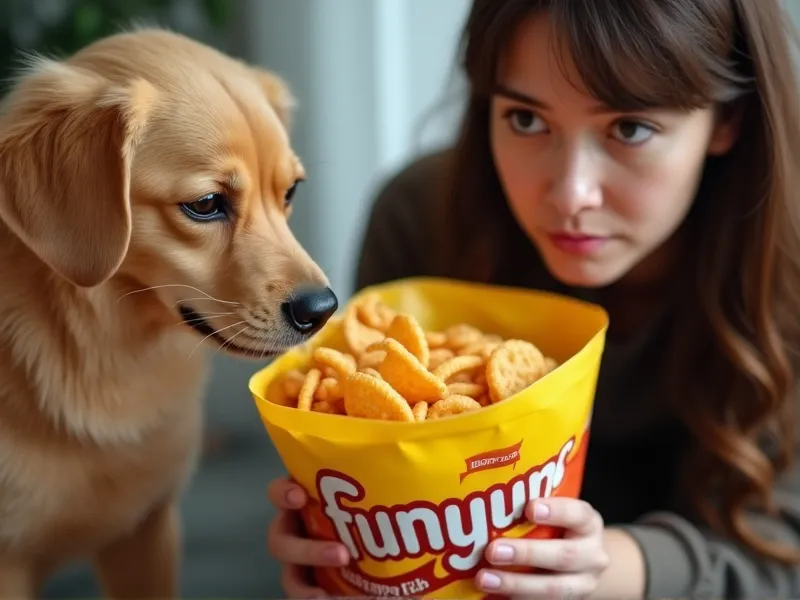
Table of Contents
- What Are Funyuns, Anyway?
- Can Dogs Eat Funyuns? The Short Answer
- Potential Benefits: Are There Any?
- The Risks: Why Funyuns Are a Bad Idea for Dogs
- What If My Dog Ate a Funyun?
- Healthier Alternatives to Funyuns
- FAQ: Your Funyun Questions Answered
- Conclusion: Keep the Crunch, Skip the Risk
What Are Funyuns, Anyway?
Before we can answer whether dogs can eat Funyuns, let’s make sure we’re all on the same page about what these snacks actually are.
Funyuns are a popular brand of onion-flavored corn snacks first introduced by Frito-Lay in 1969. They’re known for their light, airy texture and bold “onion ring” flavor—though they’re not actual onion rings (those are typically made with sliced onions battered and fried). Instead, Funyuns are made from cornmeal, which is extruded, fried, and seasoned to mimic the taste of onion rings.
Let’s peek at the ingredient list (from a standard Funyuns package):
- Cornmeal, vegetable oil (sunflower, corn, and/or canola oil), salt, onion powder, sugar, cornstarch, buttermilk, maltodextrin, monosodium glutamate (MSG), dextrose, natural flavor, citric acid, yeast extract, spice, lactic acid, garlic powder, and artificial color (yellow 5, yellow 6).
At first glance, it might seem like “just corn and seasoning,” but some of these ingredients are red flags for dogs—especially onion powder, salt, and artificial additives.
Can Dogs Eat Funyuns? The Short Answer
No, dogs should not eat Funyuns.
While one single Funyun might not send your dog to the emergency vet (depending on their size and health), these snacks are far from safe for regular or even occasional consumption. The primary culprit? Onion powder, which is toxic to dogs. Add in high salt, unhealthy fats, and artificial ingredients, and Funyuns become a snack best kept out of your pup’s reach.
Potential Benefits: Are There Any?
Let’s be fair: Could there possibly be a silver lining here? Maybe a tiny nutritional perk we’re missing?
The main ingredient in Funyuns is cornmeal, which does contain some fiber and trace nutrients like potassium. Fiber is important for dogs’ digestive health, and potassium supports muscle and heart function. But here’s the catch: The amount of fiber or potassium in a Funyun is minuscule—nowhere near enough to provide any meaningful benefit to your dog.
For context: A single Funyun has about 0.5 grams of fiber (a dog needs 2-4% of their daily calories from fiber, which for a 30lb dog is roughly 5-10 grams per day). The potassium content is even lower—maybe 10-15mg per Funyun, compared to the 2000mg a 30lb dog needs daily.
In short: Any “benefits” are negligible, and they’re heavily outweighed by the risks.
The Risks: Why Funyuns Are a Bad Idea for Dogs
Now, let’s get to the important part: why Funyuns pose a threat to your dog’s health. From toxic ingredients to choking hazards, here’s what you need to know.
Toxic Onion Powder: The Hidden Danger
The biggest red flag in Funyuns is onion powder. Onions (and their relatives, like garlic, leeks, and chives) contain compounds called thiosulphates, which are toxic to dogs. Unlike humans, dogs can’t properly digest thiosulphates, and these compounds damage red blood cells, leading to a condition called hemolytic anemia.
Symptoms of onion toxicity in dogs include:
- Lethargy or weakness
- Pale gums (a sign of low red blood cell count)
- Vomiting or diarrhea
- Rapid breathing or heartbeat
- Dark, discolored urine (due to broken-down red blood cells)
In severe cases, hemolytic anemia can be life-threatening, requiring blood transfusions or intensive care.
Now, you might be thinking: “But Funyuns are just flavored with onion powder, not fresh onions. Does that matter?” Actually, it makes it worse. Onion powder is highly concentrated—so even a small amount (like the seasoning on a Funyun) can deliver a toxic dose, especially to small dogs.
The ASPCA notes that as little as 15-30 grams of fresh onion per kilogram of a dog’s body weight can cause toxicity. For onion powder, that amount is much lower because it’s more potent. A single Funyun might not hit that threshold for a large dog, but multiple Funyuns (or even one for a tiny pup) could be dangerous.
High Sodium: A Recipe for Dehydration and Disease
Funyuns are salty—like, really salty. A 1-ounce serving (about 15 Funyuns) contains 290mg of sodium. For context, the recommended daily sodium intake for dogs is:
- Small dogs (10-20lbs): 100-200mg/day
- Medium dogs (30-50lbs): 200-300mg/day
- Large dogs (60-100lbs): 300-500mg/day
A single handful of Funyuns could exceed your dog’s entire daily sodium limit!
Too much salt in a dog’s diet can lead to:
- Dehydration: Excess sodium makes dogs thirsty, but if they can’t drink enough water, they may become dehydrated (symptoms: dry gums, sunken eyes, lethargy).
- Electrolyte imbalance: Sodium disrupts the balance of fluids and minerals in the body, which can affect organ function.
- Kidney damage: Over time, high sodium intake strains the kidneys, increasing the risk of kidney disease.
- Pancreatitis: Salt can also irritate the pancreas, leading to inflammation (pancreatitis), which is extremely painful and potentially fatal.
Unhealthy Fats: Pancreatitis and Weight Gain
Funyuns are fried in vegetable oil, which means they’re high in unhealthy fats. A 1-ounce serving has 8 grams of fat—most of which is “empty calories” with no nutritional value.
Dogs have sensitive digestive systems, and diets high in fat can trigger pancreatitis (inflammation of the pancreas). Symptoms include severe abdominal pain, vomiting, diarrhea, and loss of appetite. Pancreatitis requires immediate veterinary care and can lead to long-term health issues.
Additionally, the extra calories from fat can quickly lead to weight gain and obesity, which increases the risk of diabetes, joint pain, and heart disease in dogs.
Artificial Additives: Chemicals Your Dog Doesn’t Need
Funyuns are loaded with artificial ingredients, including:
- MSG (monosodium glutamate): A flavor enhancer linked to headaches, nausea, and digestive upset in humans. While there’s limited research on MSG in dogs, it’s best to avoid unnecessary additives.
- Artificial colors (Yellow 5, Yellow 6): These synthetic dyes are banned in some countries due to links to hyperactivity and allergic reactions. Dogs can also be sensitive to food dyes, leading to itching, ear infections, or digestive issues.
- Maltodextrin and dextrose: These are added sugars that spike blood sugar and contribute to tooth decay and obesity.
Your dog’s body isn’t designed to process these chemicals, and over time, they can accumulate and cause health problems.
Choking Hazard: Small, Crunchy, and Easy to Gulp
Finally, Funyuns are small, dry, and crispy—perfect for a dog to gulp down without chewing properly. This makes them a choking hazard, especially for small breeds or dogs who are “scarfers.” Even if they don’t choke, the sharp edges could irritate or damage their throat or digestive tract.
What If My Dog Ate a Funyun?
Don’t panic! If your dog snagged one Funyun off the floor, chances are they’ll be okay—especially if they’re a medium or large dog. Onion powder toxicity typically requires a larger dose, and one Funyun’s seasoning is unlikely to cause severe harm.
That said, you should still monitor your dog closely for the next 24-48 hours. Watch for symptoms like vomiting, diarrhea, lethargy, or pale gums. If any of these appear, contact your vet immediately.
If your dog ate multiple Funyuns (e.g., a whole handful), or if they’re a small breed (under 15lbs), call your vet right away. Even a few Funyuns could deliver enough onion powder, salt, or fat to cause issues like pancreatitis or mild anemia.
When in doubt, err on the side of caution. Your vet can advise on whether to induce vomiting (if the Funyuns were eaten recently) or monitor for symptoms.
Healthier Alternatives to Funyuns
Just because Funyuns are off the table doesn’t mean your dog can’t enjoy a crunchy snack! Here are some safe, healthy alternatives that will satisfy their craving for crunch without the risks:
1. Fresh Veggies
- Carrots: Crunchy, low-calorie, and packed with beta-carotene (good for eyesight).
- Green beans: High in fiber and vitamins, with a satisfying snap.
- Cucumber: Hydrating and low in calories—great for hot days.
- Zucchini: Soft but crunchy when raw, rich in antioxidants.
2. Fruits (In Moderation)
- Apple slices: Remove the seeds (they contain cyanide!) and core—apples are high in fiber and vitamin C.
- Blueberries: A superfood for dogs, full of antioxidants and low in sugar.
- Banana: A sweet, creamy treat with potassium (just limit to 1-2 slices, as they’re high in sugar).
3. Plain, Air-Popped Popcorn
Skip the salt, butter, and seasoning, and popcorn becomes a light, crunchy snack. It’s low in calories and high in fiber—just make sure there are no unpopped kernels (choking hazard!).
4. Commercial Dog Treats
Look for dog treats made with simple, whole ingredients (e.g., “sweet potato chips” for dogs, or freeze-dried meat treats). Avoid any with onion, garlic, salt, or artificial additives.
5. Homemade Crunchy Treats
Try baking your own dog snacks! For example:
- Mix mashed pumpkin with oats, roll into small balls, and bake until crispy.
- Slice sweet potatoes thin, toss with a tiny bit of olive oil, and bake at 250°F for 2-3 hours until crunchy (doggie “chips”).
FAQ: Your Funyun Questions Answered
Q: Are Funyuns toxic to dogs, or just “not recommended”?
A: They’re toxic due to the onion powder, which can cause hemolytic anemia. The high salt, fat, and additives make them extra risky, but the onion powder is the biggest concern.
Q: How much onion powder is toxic to dogs?
A: There’s no exact “safe” amount, but onion powder is highly concentrated. For reference, 1 teaspoon of onion powder is roughly equivalent to 1/3 cup of chopped fresh onion. The ASPCA notes that 15-30g of fresh onion per kg of body weight can cause toxicity—so even a small amount of powder could be dangerous for small dogs.
Q: Can dogs eat other onion-flavored snacks, like onion rings or potato chips with onion seasoning?
A: No. Any snack with onion powder, fresh onions, or onion extract is unsafe for dogs—same risks apply.
Q: My dog only licked a Funyun. Should I worry?
A: Probably not. A lick would only get a tiny amount of seasoning, which is unlikely to cause harm. Still, monitor for any unusual symptoms.
Q: Are there “dog-friendly” Funyuns available?
A: Not commercially. Most onion-flavored snacks (even “vegan” or “healthy” versions) still use onion powder. Stick to dog-specific treats instead!
Conclusion: Keep the Crunch, Skip the Risk
At the end of the day, Funyuns are a human snack—one that’s high in salt, fat, artificial ingredients, and (most critically) toxic onion powder. While sharing a snack with your dog is a sweet way to bond, Funyuns just aren’t worth the risk.
Instead, opt for the healthier alternatives we listed: fresh veggies, fruits, or dog-safe treats. Not only are they safer, but they’ll also provide real nutritional benefits for your pup.
As always, if you’re ever unsure about a food’s safety, consult your veterinarian. They know your dog’s unique health needs and can give personalized advice.
Here’s to many happy, healthy snack times with your furry friend—minus the Funyuns!
References
- American Society for the Prevention of Cruelty to Animals (ASPCA). “Onions.” ASPCA.org
- American Kennel Club (AKC). “Can Dogs Eat Onions?” AKC.org
- PetMD. “Pancreatitis in Dogs.” PetMD.com
- VCA Hospitals. “Salt Toxicity in Dogs.” VCAAmerica.com